Stage 1: learn the map
Before the page, meet the keyboard. A standard modern piano has 88 keys: 52 white and 36 black. The black keys come in groups of two and three, all the way along. That pattern is your map, and it never changes.
Find a group of two black keys. The white key just to its left is C. Every C on the piano sits in the same spot, so once you can find one, you can find them all.
Stage 2: seven letters on repeat
White keys are named with the letters A to G. After G comes A again, a little higher. From one C to the next is an octave, and inside it are 12 keys in all, white and black, each a semitone (a half step) from the next. The pattern of keys and names then repeats.
To tell the Cs apart, each one gets a number. Middle C, the fourth C from the left of an 88-key piano, is C4; the next C up is C5. This numbering traces back to a 1939 paper in the Journal of the Acoustical Society of America. Some keyboards and apps call middle C C3 or C5 instead, so if a number looks off by one octave, that is why. On this site, middle C is always C4.
Stage 3: sharps and flats
A sharp (♯) raises a note by a semitone, to the very next key on the right. A flat (♭) lowers it by a semitone, to the very next key on the left. The black key between C and D is both C♯ and D♭: one key, two names, depending on which way the music is heading.
Between E and F, and between B and C, there is no black key, so those white keys are already a semitone apart.
Stage 4: how standard notation shows a note
Standard sheet music writes notes on a staff of five lines. A clef at the start says which notes the lines stand for: the treble clef is a G clef, marking the G above middle C, and the bass clef is an F clef, marking the F below middle C. Each line and each space is a white-key letter, and a sharp or flat sign moves a note onto a black key.
That works, but it means a black key has no place of its own on the staff. You have to remember the signs, including the ones set once at the start of a line.
To learn every line and space, see treble clef notes and bass clef notes, and for rhythm, time signatures and the rest of the page, how to read sheet music.
Stage 5: how keyboard staff shows a note
In keyboard staff, the notation on this site, every line is a black key. The bold red line is C♯4, the black key just above middle C, and a dotted grey line marks each place where two white keys sit side by side with no black key between them (E and F, B and C). A white-key note is an oval in a gap or beside a dotted line, so the page looks like the keyboard turned on its side. Both hands share the one staff: notes with stems up are for the right hand, stems down for the left.
Because each line is a real key, there is nothing extra to remember: no clefs and no sharps or flats to carry in your head. Find the bold red line and you can find everything else. The How to read page lets you press a key and see exactly where its note sits.
Your first reading quest
- Open the How to read page and press C, then C♯, then D. Watch where each note lands.
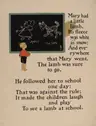
- Open Mary Had a Little Lamb (Easy). The right hand uses only C4, D4, E4 and G4.
- Press Play and follow the highlighted notes with your eyes.
- Now play it yourself, with Listen on, and see every note turn green.
Ready for more? The easiest level is full of short tunes, and how to play your first piano song walks you through one from start to finish.