Twinkle, Twinkle, Little Star sheet music (easy)
Traditional French (tune 1761), Level 1 · Beginner, 0:30


Key facts
- Level
- Level 1 · Beginner. Estimated from the notes (0 of 8 on our difficulty score)
- Time signature
- 4/4
- Key signature
- No sharps or flats
- Length
- 12 bars, 1 page
- Playing time
- 0:30
- Notes
- 64
- Range
- G2 to A4
Source and licence
Licence of the source: Public domain melody.
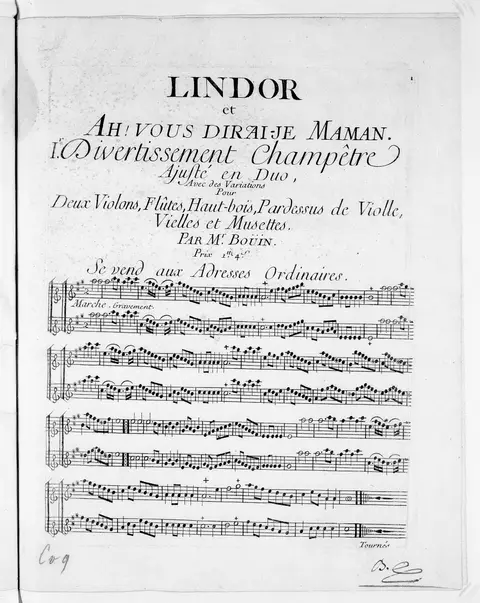
Source: Site-owned easy edition. Melody: Twinkle, Twinkle, Little Star (tune: "Ah! vous dirai-je, maman"), Traditional French (1761 (tune); 1806 (words, Jane Taylor)), public domain, checked against Wikipedia: Twinkle, Twinkle, Little Star. Left hand written for this site.
Source: Wikipedia.
Playback sounds: Salamander Grand Piano by Alexander Holm (CC BY 3.0); Upright Piano KW by Gonzalo and Roberto of FreePats (CC0 1.0); Fluid R3 GM by Frank Wen and contributors (CC BY 3.0). Full sound credits.
How to play Twinkle, Twinkle, Little Star (Easy)
The classic first song, and a perfect first quest: one hand position, slow notes, and only white keys.
Where your hands go
Right hand: thumb on middle C (C4), one finger per white key up to G4. That is your home. The only note outside it is A4 in bars 2 and 10: stretch your little finger up one key, then come home.
Left hand: it plays C3, F3 and G2, slow notes of two or four beats. Put your little finger on G2 and your thumb on F3, and C3 falls under a middle finger.
The tricky bars
Your practice plan
- Right hand alone, bars 1 to 4, saying the note names out loud.
- Right hand alone, bars 5 and 6, which make up the whole middle verse.
- Left hand alone, counting four beats in every bar.
- Hands together, slowly, one line at a time.
- Play it all with Listen on. Every note should turn green.
Watch out for
- Holding the repeated notes as one long note. Each pair, like C4, C4, is two separate presses.
- Cutting the half notes at the ends of bars 2, 4, 6, 8, 10 and 12 short. Give them two full beats.
- Forgetting to move the left hand down to G2 in bars 4, 6, 8 and 12.
Power-up: press Loop, tap the first and last of the tricky bars, and they repeat until they feel easy. Hands in Options lets you practise one hand at a time. New to the notation? Start with how to read keyboard staff, then how to practise piano.
0:00 / 0:30