Erik Satie
French composer, 1866–1925. 5 pieces to play here.
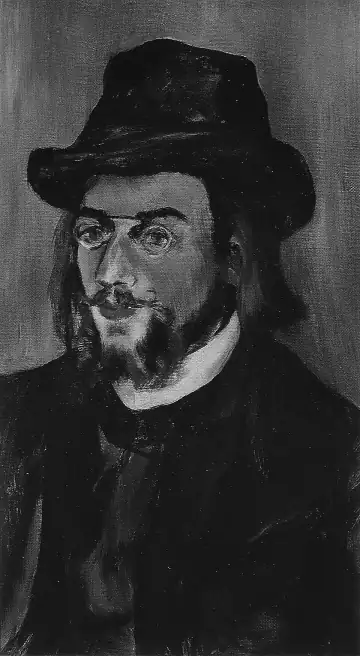


- Born
- 17 May 1866, Honfleur, France
- Died
- 1 July 1925, Paris, France
Life
Satie was born in Honfleur on 17 May 1866. He studied at the Paris Conservatoire, dropped out, and in 1887 moved to Montmartre, where he was hired as second pianist at the famous Chat Noir cabaret.
From 1898 he lived alone in Arcueil, a suburb of Paris. In 1905 he went back to school, studying counterpoint at the Schola Cantorum for three years. His ballet Parade (1917), made with Cocteau, Picasso and Massine, was scored for typewriters, sirens and other unusual instruments, and a group of young composers called Les Six adopted him as their patron saint. Debussy, a close friend for nearly 30 years, orchestrated several of his works. Satie died in Paris on 1 July 1925.
Why play Satie
The three Gymnopédies, written in 1888, use chords that were new at the time, and along with the Gnossiennes they are among the few Satie pieces that reached a wide public. They are slow, calm and spacious: wonderful for learning to listen to your own sound.
Start with the easy Gymnopédie No. 1, then try the original, No. 2 and No. 3.
When Satie lived
Pieces by Erik Satie
 Gymnopédie No. 1 (Easy) New0:57Erik SatieAlso at Levels 5 and 8
- Gymnopédie No. 1 (Next Step) New0:57Erik SatieAlso at Levels 1 and 8
- Gymnopédie No. 2 New3:15Erik Satie
- Gymnopédie No. 1 New2:21Erik SatieAlso at Levels 1 and 5
- Gymnopédie No. 3 New3:00Erik Satie
Picture credits
- Erik Satie. Suzanne Valadon, 1893. Wikimedia Commons, Public domain.
Sources
Every fact on this page was checked against these.
- Erik Satie, Encyclopaedia Britannica
- Erik Satie, IRCAM
- Erik Satie: music from the closet, Schirn Kunsthalle Frankfurt